What this module does
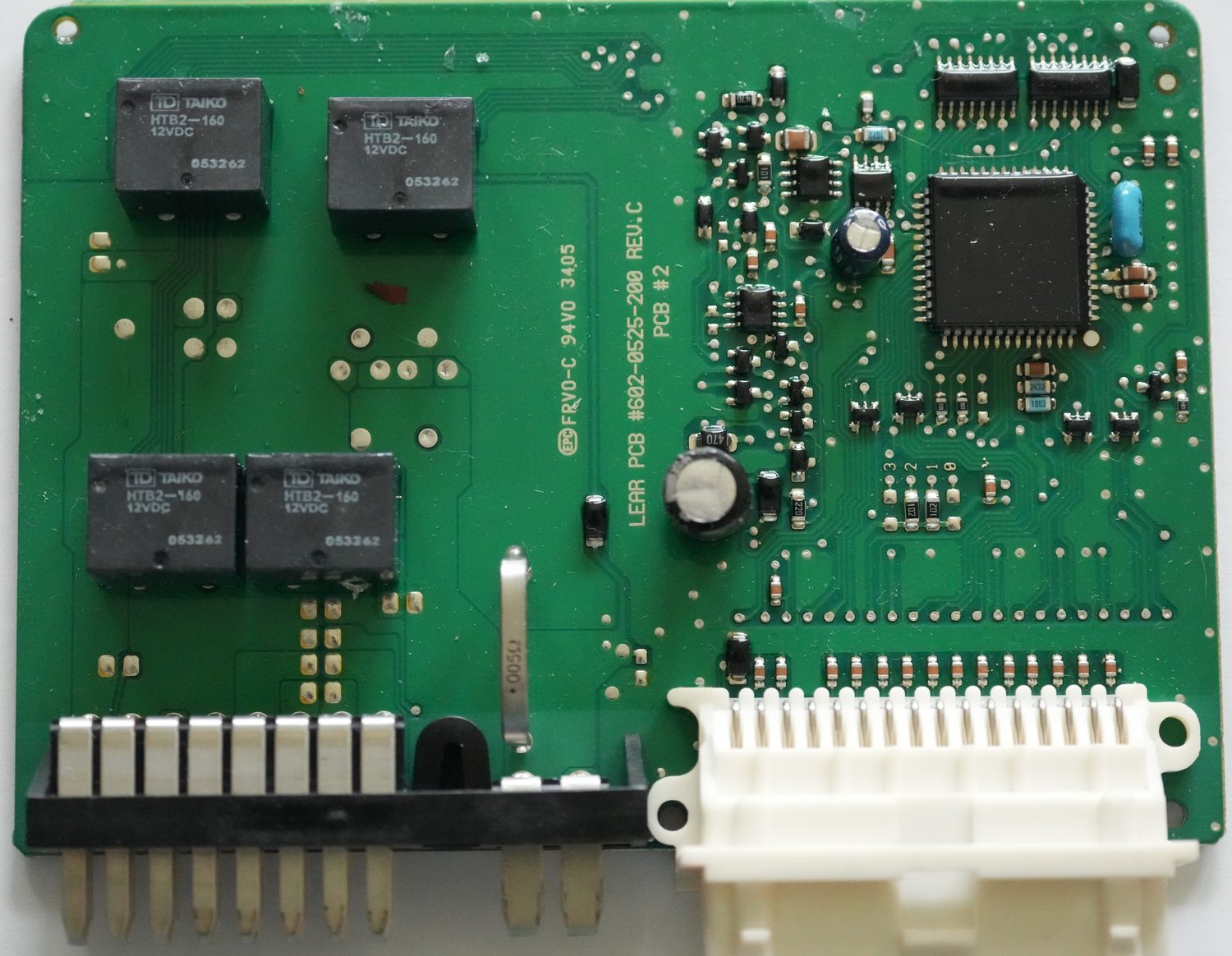
The FTC module is the brain of the XLR's retractable hardtop. When you hold the top switch, it runs the sequence in order: lower the windows, open the front tonneau, release and raise the rear deck lid, stow or raise the top, then close everything back down. It enables the hydraulic pump, commands the solenoid valves, and constantly reads the top's position sensors and the pump's temperature sensor to know whether each step actually happened before moving to the next.
Why these modules fail
The FTC lives low in the rear compartment, right next to the hydraulic pump. If the trunk drain tube clogs or comes loose, that corner fills with water and submerges the module — and once the board is water-damaged, it's typically done. Owners chase it with relay swaps and re-learns, but a flooded chip rarely comes back. Because GM has discontinued the part, a failure has meant a top that won't move and few good options.
Good to check first
Many top faults are actually loose or failing position sensors, low hydraulic fluid, or a weak battery — not the module. If your module compartment has stayed dry, it's worth ruling those out before replacing the FTC. Happy to talk it through before you buy.
What you get
- A newly manufactured FTC board — not a used pull or a relay-only patch.
- Original connector pinout, so it mates to the factory harness with no adapters or splicing.
- Every unit exercised on the bench against the original module's behavior before it ships.
Installation note
The module installs in the rear compartment (battery disconnected, side trim removed, three connectors). After any FTC replacement the top positions must be re-learned with a GM Tech 2 (or equivalent) under Module Replacement/Setup → FTC, followed by a top calibration cycle. Unless you have access to a Tech 2, plan on an XLR-experienced shop for the re-learn — it's the final step that makes the new module behave.